
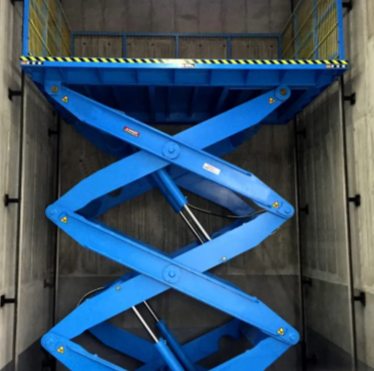
Industrial Lifting Platform Applications You Didn’t Know About
Introduction
Industrial lifting platforms, also known as 升降台, are often associated with basic lifting and material handling tasks in warehouses, factories, and construction sites. While these applications are well-known, lifting platforms have a variety of innovative and less obvious uses that can significantly improve efficiency, safety, and versatility across industries. This article explores some of the industrial lifting platform applications you might not know about.
Precision Assembly and Manufacturing
Beyond simply lifting heavy materials, industrial 升降台 are widely used in precision assembly operations. In manufacturing settings, lifting platforms can position components or machinery at exact working heights, enabling assembly workers to perform intricate tasks comfortably and safely.
For example, in the electronics or automotive industries, lifting platforms help align parts during assembly, reducing the risk of errors and improving production quality. By ensuring stability and precise height adjustment, platforms contribute to consistent product output and operational efficiency.
Maintenance and Equipment Servicing
Industrial lifting platforms are also invaluable for maintenance and servicing tasks. Large machinery, HVAC systems, and production line equipment often require access to elevated or hard-to-reach areas. Using a 升降台, maintenance personnel can safely access these areas without the need for scaffolding or ladders.
This application is particularly beneficial in manufacturing plants and workshops, where frequent inspections and repairs are required. Lifting platforms ensure that maintenance tasks are completed efficiently, safely, and with minimal disruption to ongoing operations.
Loading and Unloading of Heavy Goods
While this may seem like a common use, there are innovative ways lifting platforms enhance loading and unloading processes. Mobile or adjustable 升降台 can handle irregularly shaped or oversized goods that conventional forklifts or cranes struggle with.
In logistics and distribution centers, lifting platforms improve efficiency by aligning goods with transport vehicles, conveyor belts, or storage racks. This reduces manual handling, speeds up operations, and minimizes the risk of product damage or workplace injuries.
Integration with Automated Systems
Modern industrial lifting platforms are increasingly integrated with automated systems. Robotics, conveyor belts, and IoT-enabled equipment work in tandem with 升降台 to move materials seamlessly throughout production lines or warehouses.
For instance, in automated warehouses, lifting platforms can lift pallets to precise levels for robotic retrieval or storage. This integration streamlines workflows, reduces manual intervention, and maximizes the efficiency of automated processes.
Access in Confined or Vertical Spaces
Lifting platforms are not just for horizontal material transport; they are also useful in confined or vertical spaces where traditional lifting equipment cannot operate. Vertical lifts or compact 升降台 can navigate tight areas in multi-level facilities, enabling safe and efficient material movement.
Construction sites, industrial plants, and storage facilities benefit from this application by using lifting platforms to move tools, materials, or equipment vertically without extensive structural modifications or additional machinery.
Support for Quality Control and Inspection
Quality control is critical in any industrial setting. Lifting platforms enable inspectors to access elevated sections of machinery, production lines, or storage units to perform checks efficiently.
By using a 升降台, inspectors can maintain proper posture, reduce strain, and conduct thorough inspections without compromising safety. This improves both the accuracy of quality assessments and the comfort of personnel performing repetitive inspection tasks.
Temporary Scaffolding and Elevated Workstations
In certain industrial scenarios, lifting platforms can double as temporary scaffolding or elevated workstations. This application is particularly useful in workshops, construction sites, or maintenance areas where permanent scaffolding may not be feasible or necessary.
Adjustable 升降台 provide stable, elevated work surfaces that allow employees to perform tasks at various heights safely. This flexibility reduces setup time and enhances productivity in dynamic work environments.
Specialized Applications in Warehousing
In modern warehousing, lifting platforms are used in specialized applications beyond traditional stacking or pallet lifting. For example, they can assist with inventory audits, seasonal stock management, or rearranging storage layouts.
Mobile 升降台 enable operators to access high shelves, move items efficiently, and reorganize stock without the need for cranes, forklifts, or extensive manual labor. These applications demonstrate how versatile lifting platforms can be when fully utilized in industrial environments.
Conclusion
Industrial lifting platforms, or 升降台, are much more than basic lifting tools. Their applications extend into precision assembly, maintenance, automated integration, confined space access, quality control, temporary workstations, and specialized warehousing tasks. By leveraging these versatile uses, industries can enhance safety, improve operational efficiency, and optimize workflow across a wide range of tasks. Understanding and adopting these innovative applications ensures that lifting platforms deliver maximum value beyond conventional material handling roles.
You may also like



Leave a Reply