

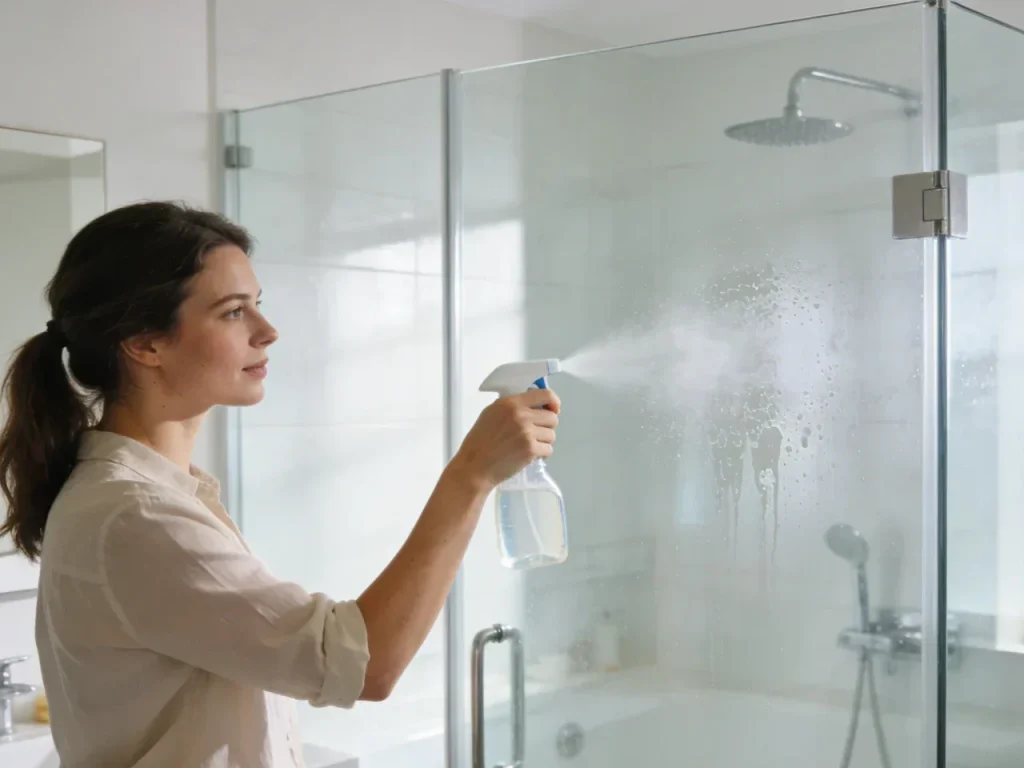
Cloudy shower doors usually look worse than the cleaning job actually is. Soap residue, body oils, and mineral deposits can build into a dull film, but aggressive scrubbing can damage finishes or leave scratches. The safer approach is to soften the buildup first, use non-abrasive tools, and repeat gentle cleaning when necessary.
Start With the Mildest Cleaning Method
Rinse the shower door with warm water to loosen surface residue. Apply a glass-safe bathroom cleaner according to its directions, or use a mild cleaning method appropriate for the door and surrounding finishes.
Homeowners comparing everyday household ideas and other cleaning suggestions should be cautious about mixing ingredients from unrelated tips. A stronger mixture isn’t automatically a better cleaner, and some household chemicals should never be combined.
Choose soft tools
A microfiber cloth, soft sponge, or non-scratch pad is usually a better starting point than an abrasive scrubber. Metal tools, rough powders, and damaged scouring pads can leave marks that remain after the soap film is gone.
Give the Cleaner Time to Work
One common mistake is spraying a cleaner and scrubbing immediately. Allowing the product to sit for the recommended contact time can soften residue and reduce the amount of pressure needed.
People browsing practical home reading may encounter many quick-cleaning tricks, but the surface material matters. Glass, coated glass, metal trim, tile, natural stone, and acrylic components don’t always tolerate the same products.
| Problem | Safer First Move | Avoid |
|---|---|---|
| Light soap film | Mild glass-safe cleaner | Hard scraping |
| Thick residue | Repeat gentle treatment | Excessive pressure |
| Water spots | Dry after rinsing | Air-drying every time |
| Sensitive trim | Test cleaner first | Harsh chemicals |
Rinse and Dry the Door Completely
Cleaning isn’t finished when the residue loosens. Rinse away the cleaner so dissolved soap and minerals aren’t left behind, then dry the glass with a clean microfiber cloth or squeegee.
General home care discussions can provide ideas for maintenance routines, but manufacturer instructions should take priority when a shower door has a special coating. Some protective finishes require specific cleaners or prohibit abrasive products.
Drying matters because standing droplets can leave fresh mineral marks. A quick squeegee after regular showers often reduces how quickly visible buildup returns.
Where Aggressive Cleaning Goes Wrong
Soap film can encourage people to scrub harder when they don’t see immediate results. That can turn a removable cleaning problem into permanent surface damage.
Another mistake is using a sharp blade on glass without knowing whether the panel has a coating or whether the tool is appropriate. Even common household cleaners can harm nearby stone, metal, grout, or seals. Test an unfamiliar product in a small area and follow the product and shower manufacturer’s instructions rather than assuming every hard surface can handle the same treatment.
Frequently Asked Questions
Why does soap film keep returning to shower doors?
Residue forms when soap, body products, oils, and minerals remain on the surface after water dries. Regular rinsing and removing water with a squeegee can slow the buildup between deeper cleanings.
Can I use an abrasive sponge on shower glass?
It depends on the product and the glass finish, but abrasive materials can scratch or damage coatings. A soft microfiber cloth or clearly labeled non-scratch cleaning pad is a safer starting point.
How often should shower doors be cleaned?
Frequency depends on water hardness, shower use, ventilation, and the products used. Light maintenance several times a week can make deep cleaning less demanding because residue has less time to accumulate.
Prevent the Next Heavy Buildup
Removing soap film is easier when you rely on time and the right cleaner instead of force. Soften deposits, wipe with non-abrasive materials, rinse thoroughly, and dry the surface. Once the door is clear, a small amount of regular maintenance can prevent the cloudy layer from becoming another difficult scrubbing job.
