

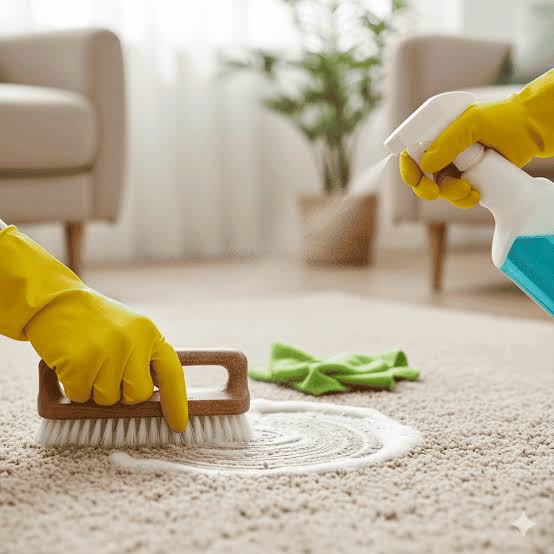
A smelly carpet rarely improves for long when you only cover the odor with fragrance. The smell usually returns because something remains in the fibers, carpet backing, padding, or material beneath it.
Removing carpet odors successfully starts with locating the source. Spills, pet accidents, dampness, food residue, smoke, and dirty padding can require different cleaning approaches.
Find the Actual Odor Zone First
Avoid treating the entire room immediately. Move slowly around the carpet and identify where the smell becomes strongest, especially near furniture, pet areas, doorways, or places where drinks and food are commonly used.
General household care references may provide cleaning ideas, but close inspection matters because odor can travel beyond the original stain.
Check whether the carpet feels damp or looks discolored. An unexplained persistent musty smell may indicate moisture below the surface rather than dirt sitting only in the visible fibers.
Clean Fresh Spills Before They Travel Deeper
Fresh liquid should be blotted rather than aggressively rubbed. Rubbing can spread contamination across a larger area and push material deeper into the pile.
Absorb as much liquid as practical with clean towels before applying an appropriate carpet-cleaning product. People reading home maintenance discussions may encounter many homemade methods, but always check whether a cleaning ingredient is suitable for your specific carpet material.
| Odor Source | Where It May Remain | First Check |
|---|---|---|
| Drink spill | Fibers/backing | Sticky residue |
| Pet accident | Padding | Repeat odor |
| Dampness | Under carpet | Moisture source |
| Food debris | Fibers/edges | Hidden crumbs |
Test any cleaner in a small, less visible area first. Carpet dyes and fibers can react differently, particularly with strong chemicals.
Pay Attention to Padding and the Floor Below
Surface cleaning may fail when liquid has reached the pad underneath. Carpet padding can hold moisture and odor even after the visible carpet looks clean.
Broader cleaning information can help with routine care, but a recurring odor in exactly the same spot often deserves a deeper inspection.
If the carpet can be safely lifted, checking the backing and padding may reveal staining or moisture. Extensive contamination sometimes requires replacing a section of padding rather than repeatedly cleaning the surface.
Dry the Area Completely After Cleaning
Moisture left behind can create another odor problem. After cleaning, encourage drying with ventilation, fans, or appropriate indoor climate control.
Avoid soaking the carpet unnecessarily. More cleaning solution doesn’t automatically mean better cleaning, and excessive liquid can travel downward where extraction becomes harder.
A carpet-cleaning machine may help with larger dirty areas, but follow the equipment and carpet manufacturer’s directions. Repeated passes with too much solution can leave residue as well as moisture.
Why Odors Sometimes Keep Coming Back
A common mistake is confusing deodorizing with cleaning. Powders, sprays, candles, and fragrances may change what you smell temporarily without removing the material causing the odor.
Another problem is treating only the visible stain. Liquids can spread under the carpet beyond the spot seen from above.
Persistent musty odors also shouldn’t be repeatedly masked. If the underlying issue is an ongoing leak or moisture problem, cleaning the carpet alone won’t solve it. The moisture source needs attention first.
Frequently Asked Questions
Can baking soda remove carpet odors?
Baking soda may help absorb some mild odors, but it won’t remove every source of contamination. Follow carpet-care guidance and consider deeper cleaning when a smell comes from spills, moisture, pet accidents, or the underlying pad.
Why does my carpet smell again after cleaning?
The original material may still be present in the backing or padding, or the carpet may not have dried completely. Residue left from cleaning products can also contribute to an unpleasant smell.
Should carpet padding be replaced after a serious spill?
Sometimes. If padding remains contaminated, damaged, or persistently odorous after appropriate cleaning and drying, replacing the affected section may be more effective than repeatedly treating the carpet surface.
Remove the Cause Before Adding Fragrance
A fresh-smelling room starts with source removal, not stronger perfume. Identify the exact problem area, clean it using a method suitable for the carpet, and make sure the fibers and layers beneath are fully dry.
If the same odor repeatedly returns, investigate below the surface. Finding a damp pad, hidden spill, or moisture problem early can save many rounds of ineffective deodorizing.
