
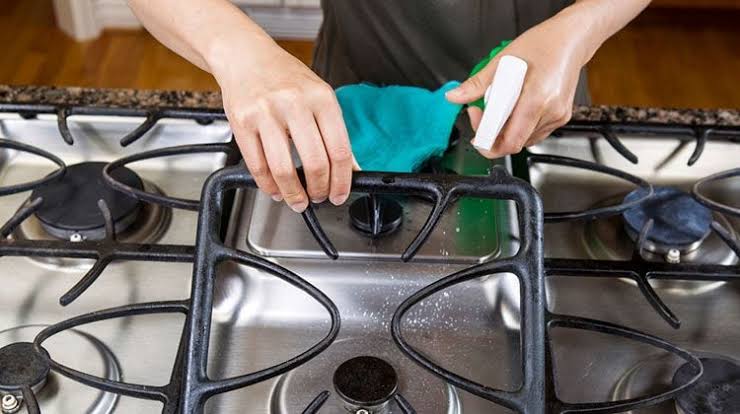
Greasy Stove Surfaces – Remove Buildup Without Harsh Scrubbing
Grease on a stove becomes difficult to remove when cooking oil mixes with dust, food particles, and repeated heat. The easiest cleanup usually comes from softening that layer first rather than immediately attacking it with hard scrubbing.
A few minutes of soaking can often save considerably more physical effort afterward.
Start With a Cool Stove
Turn burners off and allow the cooking surface to cool before cleaning. Remove grates, burner caps, or other detachable pieces only according to the appliance’s design.
Wipe loose crumbs and dry debris away first. That prevents them from turning into gritty paste once cleaner is added.
Home-maintenance ideas found through general reference topics may vary widely, so always consider the material of your own stove before adopting a cleaning method.
Identify the Surface Material
Glass, stainless steel, enamel, and coated metal do not respond identically to cleaning tools. Abrasive pads that seem harmless on one surface may scratch another.
If you’re uncertain, start with the least aggressive method and check the appliance manufacturer’s cleaning guidance.
Soften Grease Before Scrubbing
Warm water mixed with a small amount of dish soap can loosen many everyday grease deposits. Apply it with a soft cloth or sponge and let the dampness remain on the dirty area briefly instead of wiping it away immediately.
People exchanging household ideas on shared writing spaces may suggest countless cleaning combinations, but stronger isn’t always better. A mild cleaner given enough contact time can outperform aggressive scrubbing.
| Problem | Gentle First Step | What to Avoid |
|---|---|---|
| Fresh splatter | Warm soapy cloth | Hard scraping |
| Sticky grease film | Short soaking period | Dry scrubbing |
| Food residue | Soften before lifting | Metal tools |
| Delicate finish | Test mild cleaner | Abrasive powder |
Work in Small Areas
Cleaning the entire stove at once can allow loosened grease to dry again before you reach it. Instead, work section by section.
Wipe softened buildup with a non-scratch cloth, rinse the cloth frequently, and repeat if needed. For stubborn spots, several gentle passes are often safer than one aggressive attempt.
Broader household content collections can provide inspiration, but cleaning instructions should always be matched to the exact material and finish in front of you.
Mistakes That Make Grease Harder to Remove
Waiting until residue has been heated repeatedly makes cleanup more demanding. A quick wipe after cooking, once the surface is safely cool, prevents thin grease films from turning into stubborn layers.
Another mistake is using sharp objects to scrape burnt material. Knives, metal scrapers not intended for the appliance, and rough pads can permanently mark some finishes.
Mixing different cleaning chemicals is also unnecessary and can be unsafe. Stick with one suitable product at a time and follow its label.
Frequently Asked Questions
Can dish soap remove stove grease?
Dish soap is designed to break down oils and can handle many ordinary grease deposits. Older or heat-baked residue may require repeated cleaning or a product approved for the stove material.
Should I clean the stove while it’s warm?
Wait until the appliance is cool enough to clean safely. Cleaning a hot surface can create burn risks and may cause some products to dry too quickly.
How can I prevent greasy buildup?
Wipe splashes after cooking once the stove cools, clean removable pieces regularly, and avoid allowing several cooking sessions to bake the same residue repeatedly.
Make Routine Wiping Do the Hard Work
Greasy stove cleaning becomes easier when buildup never gets the chance to harden for weeks. Use mild cleaning methods first, let moisture soften stubborn residue, and choose tools that won’t damage the surface.
A short cleanup after ordinary cooking usually requires less effort than one major scrubbing session later. Consistency protects both the stove’s appearance and your time.
You may also like

Leave a Reply