
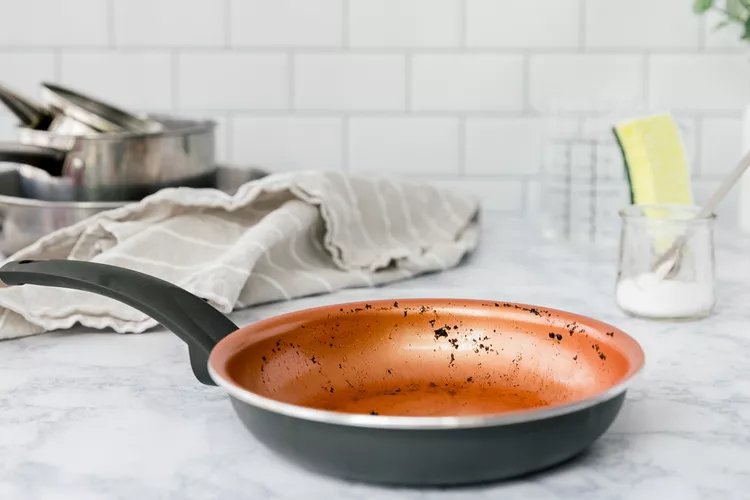
Burnt Pan Marks – Remove Residue Without Heavy Scraping
Burnt pan marks often look worse than they are. Instead of immediately attacking the surface with aggressive scraping, soften the residue first so heat-damaged food can release with less effort and less risk of scratching the cookware.
The right method depends on the pan’s material, so gentle cleaning should always come before harsher techniques.
Let the Pan Cool Before Cleaning
Start by allowing the pan to cool enough to handle safely. Pouring cold water into an extremely hot pan can cause sudden temperature changes that may distort some cookware.
Once cooled, remove loose food with a wooden or silicone utensil. General media reading may offer dozens of household tricks, but the safest starting point is usually simple soaking rather than an aggressive homemade mixture.
Warm water and dish soap can loosen more residue than expected.
Soak Before You Scrub
Cover the burnt area with warm water and add a small amount of dishwashing liquid. Leave it for 20 to 30 minutes, or longer for stubborn residue.
Use a nonabrasive sponge after soaking. Readers comparing tips from online headline sources may encounter methods involving knives, metal tools, or harsh abrasives, but those approaches can permanently mark coated or polished surfaces.
| Method | Useful For | Main Caution |
|---|---|---|
| Warm soapy soak | Light residue | May need repeating |
| Baking soda paste | Stubborn marks | Test delicate finishes |
| Gentle simmer | Cooked-on food | Handle hot pan carefully |
| Soft sponge | Final cleanup | Avoid excessive pressure |
Use Baking Soda Carefully
For many uncoated stainless-steel pans, a paste made from baking soda and a little water can help lift remaining marks. Apply it to the affected area, leave it briefly, then wipe gently with a soft sponge.
Avoid assuming that one method works for every finish. Nonstick coatings, seasoned cast iron, copper surfaces, and enameled cookware have different cleaning needs.
Broader writer-centered publications and lifestyle content may present universal cleaning shortcuts, but manufacturer care instructions should take priority when dealing with specialized cookware.
Try a Gentle Simmer for Stubborn Residue
If soaking isn’t enough and the pan can safely be heated, add enough water to cover the burnt area and bring it to a gentle simmer.
Let the heat soften the residue for several minutes. Turn off the burner and allow the water to cool before working at the remaining material with a wooden or silicone utensil.
A common failure point is letting the pan boil dry. Stay nearby and keep enough water in the pan to cover the affected surface.
Where Aggressive Cleaning Causes Problems
Heavy scraping can turn a cosmetic cleaning problem into permanent cookware damage. Metal tools may scratch stainless steel and can seriously damage nonstick coatings.
Strong abrasive powders can also dull polished finishes. More force isn’t always more effective. Repeating a gentle soak or simmer is often slower but safer.
If a pan has a peeling nonstick coating, deep cracks, warping, or other significant damage, cleaning alone may not make it suitable for continued use.
Frequently Asked Questions
Can vinegar remove burnt food from a pan?
Vinegar may help loosen some residues on compatible cookware, but it isn’t appropriate for every surface. Check the manufacturer’s guidance before using acidic cleaners, particularly on reactive metals or specialized finishes.
Can steel wool be used on burnt pans?
It depends on the cookware. Steel wool can scratch polished surfaces and should generally be avoided on nonstick or delicate finishes. A nonabrasive sponge is the safer starting point.
Why do burnt marks remain after the food is gone?
Heat can leave discoloration even after physical residue has been removed. That staining may require a material-specific cleaner, and some discoloration is cosmetic rather than leftover food.
Use Patience Instead of Pressure
Burnt cookware rarely needs an immediate battle with a scraper. Cool the pan, soak the residue, use a surface-appropriate cleaner, and repeat gentle treatment when necessary.
Protecting the cookware matters as much as removing the mark. A slower method that preserves the surface is usually more useful than a fast method that leaves permanent scratches.


Leave a Reply