

A dishwasher can have good detergent, hot water, and a full cleaning cycle yet still leave dishes gritty or the interior smelling unpleasant. A dirty dishwasher filter is often worth checking because trapped food and debris can interfere with normal cleaning.
Fortunately, many removable filters can be inspected and cleaned with basic household supplies.
Find the Filter Before Cleaning Anything
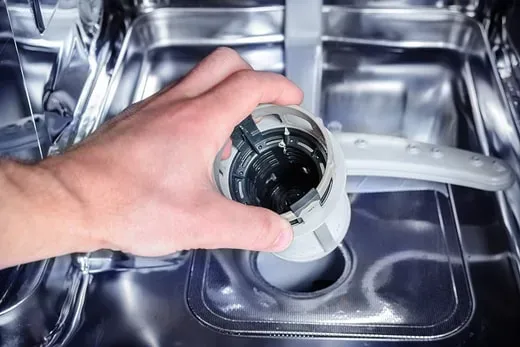
The filter is commonly located near the bottom of the dishwasher beneath or around the lower spray arm, although designs differ. Remove the lower rack and inspect the base before taking anything apart.
If you’re comparing cleaning advice from home information articles, remember that the dishwasher’s own manual should control model-specific removal instructions.
Check Whether the Filter Is Removable
Some machines have manual-clean filters, while others use different filtration or disposal systems. Don’t force a component that doesn’t release easily.
Look for arrows, locking marks, or a cylindrical filter that twists before lifting out. If the design isn’t obvious, locate the model number and consult the manufacturer’s instructions.
Remove Loose Food and Rinse the Filter
Once the dishwasher is off and the removable filter has been taken out correctly, dispose of loose debris. Rinse the filter under warm running water.
A soft brush can help remove material caught in the mesh. Avoid aggressive tools that could tear or distort the filtering surface.
General home-maintenance publishing resources may offer useful reminders, but specific cleaning restrictions can vary by dishwasher manufacturer.
| Problem | Likely Filter Issue | Practical Check |
|---|---|---|
| Grit on dishes | Debris trapped in filter | Rinse mesh |
| Interior odor | Food residue collecting | Clean filter and sump area |
| Slow drainage | Debris may obstruct flow | Inspect accessible areas |
| Poor cleaning | Restricted water circulation | Check filter installation |
Clean the Area Around the Filter
Removing the filter gives you a chance to inspect the accessible area beneath it. Wipe away food fragments or residue without pushing debris farther into openings.
Check the spray arms as well. If accessible holes are blocked with food or mineral debris, water distribution may suffer even after the filter is clean.
Routine household editorial guides can remind homeowners about overlooked maintenance jobs, but dishwasher parts should always be handled according to the appliance’s design.
Reinstall the Filter Correctly
A clean filter won’t help if it is seated incorrectly. Replace each component in the same position and lock it according to the manufacturer’s markings.
Before running a full load, rotate the lower spray arm gently by hand where the design allows. Make sure the filter or another component isn’t blocking its movement.
Test With an Empty Cycle
If odor or residue has been persistent, running a normal empty cycle after cleaning can help you see whether the problem improves.
Persistent standing water, leaking, unusual noises, or repeated drainage problems may indicate an issue beyond routine filter cleaning.
Common Dishwasher Cleaning Mistakes
More detergent isn’t automatically the answer to poorly cleaned dishes. Excess detergent can create its own residue, especially when the actual problem is trapped food, incorrect loading, blocked spray arms, or a dirty filter.
Another mistake is using sharp objects or stiff metal brushes on delicate filter mesh. A damaged filter may stop performing properly, turning a simple maintenance task into a replacement job.
Frequently Asked Questions
How often should a dishwasher filter be cleaned?
The appropriate schedule depends on the dishwasher design, how frequently it runs, and how much food reaches the filter. Inspect it periodically and follow the manufacturer’s maintenance guidance.
Can a dirty dishwasher filter cause bad smells?
Yes. Food particles and residue trapped around the filter can contribute to unpleasant odors, particularly when debris remains wet between wash cycles.
Why are dishes still dirty after cleaning the filter?
Other causes can include blocked spray arms, poor loading, unsuitable detergent, water-temperature issues, drainage problems, or mechanical faults. The filter is only one part of the cleaning system.
Keep the Cleaning System Clear
A dishwasher filter is easy to overlook because it sits out of sight, yet accumulated debris can affect both cleanliness and odor. Inspect the filter, clean it gently, clear nearby residue, and reinstall every piece correctly.
If performance remains poor after routine maintenance, move beyond repeated cleaning and investigate the spray, drainage, water, and mechanical systems instead.
