
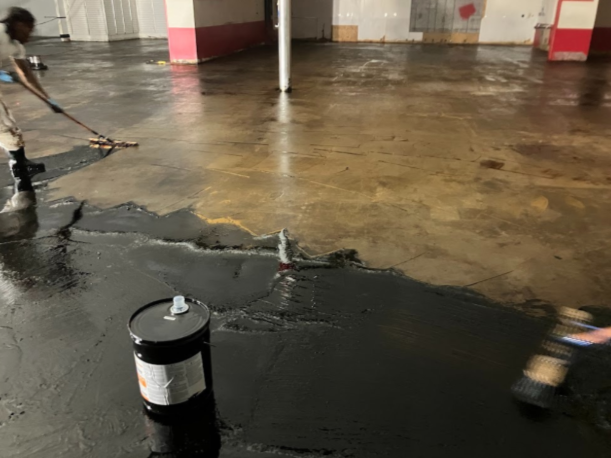
What Asbestos Abatement Means for Commercial Buildings
For commercial property owners, investors, and facility managers, asbestos abatement is more than a regulatory requirement, it is an essential part of protecting occupants, preserving property value, and minimizing long-term liability. Older commercial buildings often contain asbestos-containing materials that remain harmless when undisturbed but can pose significant health risks if damaged during renovations, demolition, or natural disasters.
Understanding when asbestos abatement becomes necessary and how professional abatement should be handled allows businesses to make informed decisions while maintaining compliance with applicable regulations. Mako Services LLC helps commercial property owners navigate these challenges with professional environmental remediation solutions that prioritize safety, regulatory compliance, and project efficiency.
Why Asbestos Remains a Concern in Commercial Buildings
Although asbestos is no longer widely used in construction, it was incorporated into countless commercial buildings throughout much of the twentieth century because of its durability, heat resistance, and insulating properties.
Today, asbestos may still be found in materials such as:
- Ceiling tiles
- Pipe insulation
- Flooring adhesives
- Roofing materials
- Spray-applied fireproofing
- Wall textures
The presence of these materials does not automatically create a hazard. Problems typically arise when renovation projects, structural deterioration, flooding, storms, or demolition activities disturb asbestos fibers and release them into the air.
Airborne asbestos fibers can present serious health risks when inhaled over time, making proper identification, containment, and professional removal essential before renovation, demolition, or other construction activities begin.
Why Professional Asbestos Abatement Matters
Commercial projects involve far greater complexity than residential properties. Schools, office buildings, healthcare facilities, manufacturing plants, warehouses, and retail centers all have unique regulatory obligations and operational considerations.
- Professional asbestos abatement helps organizations:
- Reduce potential exposure risks for employees and occupants.
- Support compliance with federal, state, and local regulations.
- Prevent contamination during renovation or demolition.
- Limit project delays caused by unexpected hazardous material discoveries.
- Protect long-term property value and future redevelopment opportunities.
Attempting to manage asbestos without qualified professionals can increase liability while exposing workers and occupants to unnecessary health risks.
The Importance of Early Building Assessments
One of the most effective ways to control project costs is identifying asbestos before construction begins.
A comprehensive building assessment evaluates the property’s condition, identifies hazardous materials, and helps project teams develop realistic timelines before renovations or demolition start. Early planning reduces unexpected work stoppages and allows contractors to integrate environmental remediation into the overall project schedule.
This proactive approach is especially valuable when purchasing older commercial properties or planning adaptive reuse projects.
Common Situations That Require Asbestos Abatement
Many commercial property owners assume asbestos only becomes an issue during demolition. In reality, several situations may require professional evaluation.Major renovation projects frequently expose concealed insulation, flooring, or wall materials that contain asbestos.
Storm damage, flooding, or fire can compromise previously intact materials, increasing the possibility of fiber release.Aging facilities often experience deterioration that gradually affects insulation, ceiling systems, or pipe coverings.
Commercial property acquisitions may also require environmental due diligence before closing to identify existing liabilities.Recognizing these situations early helps organizations avoid costly surprises later.
Compliance Protects Both People and Projects
Federal agencies have established strict standards governing asbestos handling, transportation, worker protection, and disposal.
The Occupational Safety and Health Administration establishes worker safety requirements, while the EPA regulates asbestos under multiple environmental programs. Many states also enforce additional licensing and notification requirements.
Working with experienced environmental professionals helps ensure every phase of an abatement project complies with applicable regulations while maintaining proper documentation throughout the process.
Choosing the Right Environmental Partner
Not every contractor specializes in environmental remediation. Commercial property owners should look for providers with experience managing complex projects involving hazardous materials, building assessments, demolition coordination, and regulatory compliance.
An experienced environmental contractor understands how asbestos abatement fits into the larger construction process and can coordinate efficiently with architects, engineers, developers, and general contractors to minimize disruptions.
Working with an experienced environmental remediation contractor helps organizations safely address hazardous building materials while supporting regulatory compliance, efficient project planning, and successful redevelopment or construction projects.
Final Thoughts
Asbestos abatement should never be viewed simply as another construction expense. It is a critical investment in occupant safety, regulatory compliance, and successful project execution. Whether planning renovations, evaluating an aging commercial property, or preparing for demolition, identifying asbestos early and working with qualified professionals can significantly reduce risk while keeping projects moving forward.
Commercial property owners who prioritize thorough environmental assessments before construction are better positioned to protect their investments, avoid costly delays, and create safer environments for everyone who enters their facilities. Mako Services LLC, located at 601 S Harbour Island Blvd., Suite 109, Tampa, FL 33602, provides professional environmental remediation and asbestos abatement services to help businesses move forward with confidence while supporting safe and compliant projects.
Mako Services LLC
601 S Harbour Island Blvd, Suite 109 Tampa, FL 33602
Phone: 813-592-3963
Website: https://mako-services.com/
You may also like


Leave a Reply